
Russia and China: The Dynamics of Asymmetric Dependence
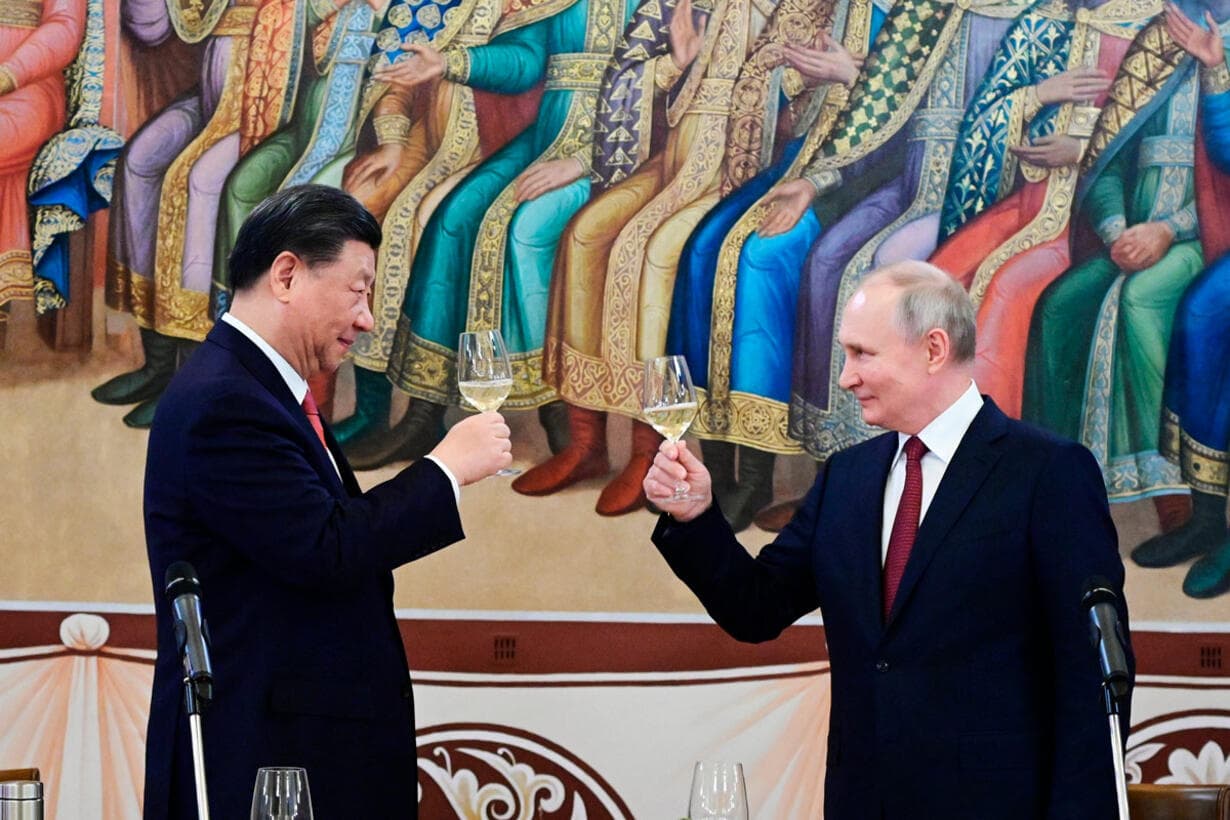
Russia, amid the reduction of its ties with the West, has found itself in an asymmetric dependence on China. Economic relations are built primarily on the export of Russian energy resources with substantial concessions, while Russia’s technological and industrial sectors are becoming reliant on Chinese supplies. The diplomatic and regional dynamics — particularly the weakening of Russia’s influence in Central Asia — also demonstrate a shift in the balance in Beijing’s favor. Taken together, these factors form a model of relations in which Russia effectively cedes a significant part of its autonomy and turns into a dependent partner of China.
In Russian political discourse, the issue of sovereignty traditionally occupies a central place.
It is used as an argument when justifying key foreign policy decisions and domestic transformations. However, against the backdrop of a radical reduction in cooperation with Western states and a growing reorientation toward the East, there is a noticeable shift in the real balance of Russia’s foreign policy autonomy. In recent years, relations between the Russian Federation and the People’s Republic of China have moved from the proclaimed strategic partnership to a model that includes elements of dependent, asymmetric interaction. This process is increasingly referred to in expert circles as “vassalization,” reflecting both the structure and the dynamics of the emerging ties.
The economic component of the relationship demonstrates the most visible degree of dependence. After the reduction of available markets, Russian energy resources have been almost entirely redirected toward China. With the ability to choose, China dictates pricing and contractual terms to a far greater extent than before. The Russian side is compelled to provide significant discounts, as there are no alternatives to such a large market. At the same time, the structure of foreign trade is becoming one-sided: Russia supplies raw materials, while China provides industrial goods and technologies, thereby creating a persistent imbalance in economic relations.
Technological dependence reinforces this asymmetry. The termination of cooperation with Western companies has resulted in a significant share of Russia’s industrial technological chains now relying on supplies from China. This affects critically important sectors — electronics, telecommunications, the automotive industry, and infrastructure systems. As a result, China gains the ability to indirectly influence the functioning of certain Russian industries, which objectively reduces Russia’s capacity for independent technological development. Replacing Western solutions with Chinese ones not only limits access to advanced technologies but also creates a strategic vulnerability, as Beijing can adjust supplies in its own interests if the political situation shifts.
The diplomatic dimension confirms the presence of an emerging hierarchy. China adheres to a cautious foreign policy, seeking to avoid direct involvement in international conflicts associated with Russia, while maintaining priority relations with key global economic centers. At the same time, Russian foreign policy is becoming increasingly flexible toward China’s position, which is reflected in Moscow’s willingness to take Beijing’s interests into account when forming a number of foreign policy decisions. Such asymmetry in room for maneuver does not correspond to the originally declared model of equal partnership.
A particularly significant factor is the shifting balance of influence in Central Asia. The region, traditionally viewed by Russia as a sphere of strategic presence, has in recent years experienced intensive penetration of Chinese capital and infrastructure projects. Chinese investments, transport corridors, and credit mechanisms have increased the dependence of regional states on Beijing. Against this backdrop, Russia’s involvement has gradually weakened, effectively resulting in the transfer of key positions to China. The absence of active efforts by Moscow to reverse this trend indicates its acknowledgement of its limited ability to compete with Beijing in this area.
The formation of Russia–China dependence is driven by a combination of internal and external factors. Isolation from Western markets and financial systems forces Russia to seek support in the East. The narrowing of diplomatic horizons makes China practically the only country capable of providing economic and technological resources under current conditions. The domestic political demand to demonstrate international partnership also strengthens the need to confirm the stability of relations with Beijing, even if this requires additional concessions.
Thus, an analysis of economic, technological, diplomatic, and regional factors suggests that the current configuration of Russia–China relations bears the hallmarks of vassal-like dependence. Despite official statements about equality and strategic partnership, the actual balance of influence indicates a gradual loss by Russia of a significant part of its foreign policy autonomy. The current dynamic is long-term in nature and points to a further deepening of asymmetry unless the strategic course is revised.