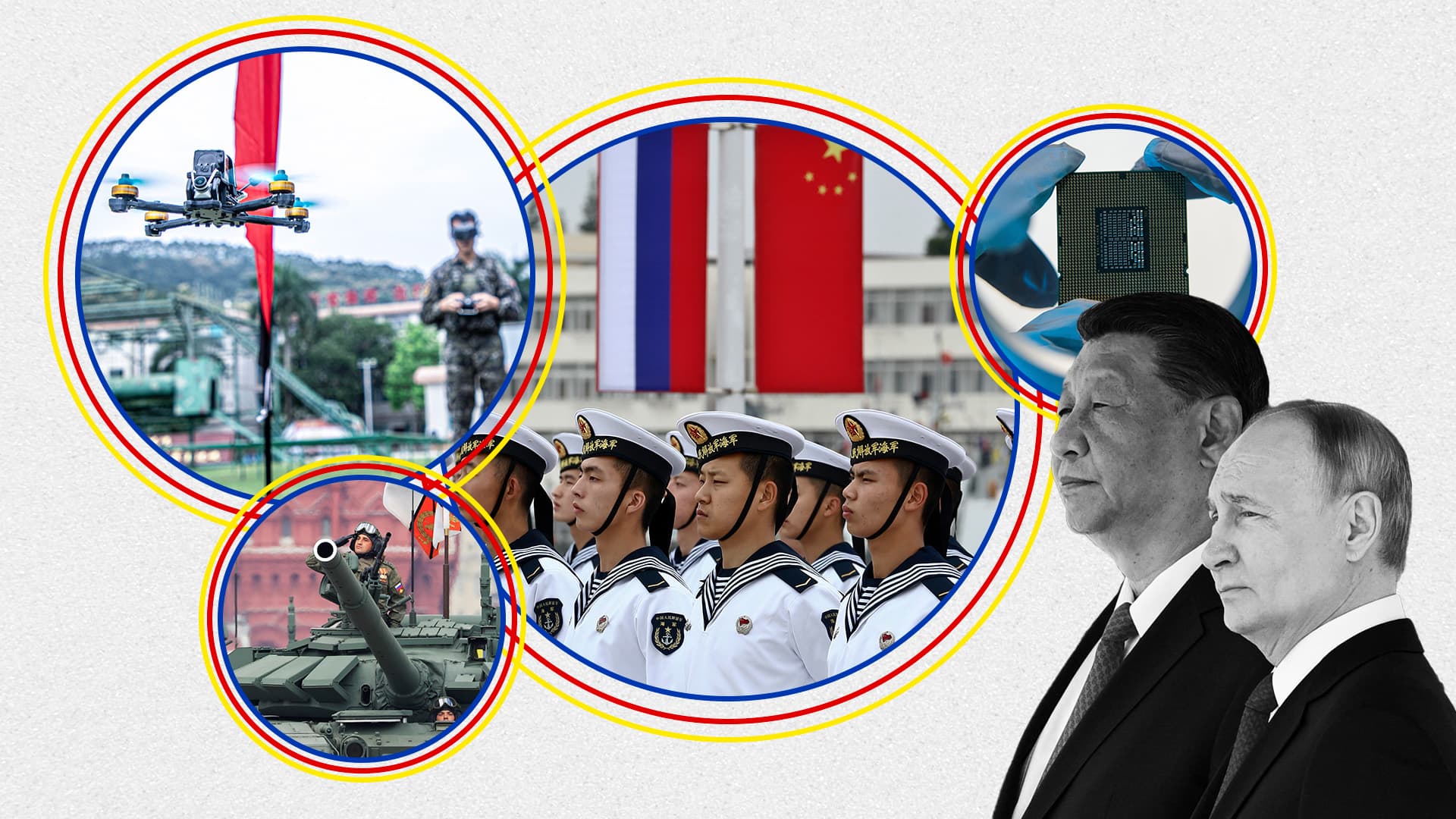
Russia and Its Growing Dependence on China
Since 2022, Russia, cut off from most Western markets and technologies, has been forced to seek support in the East. China has become not just a partner, but the main 'lifeline' — in energy, trade, financial connections, and technological cooperation.
With the onset of the full-scale war and unprecedented sanctions, Russia faced the urgent need to reorient its foreign economic ties. China has become the main buyer of Russian energy and raw materials: the primary recipient of resources that previously went to European markets.
This reorientation is not just a commercial maneuver, but an element of a new geopolitical dependency. When an economy is almost entirely tied to a single market, the buyer (and thus the foreign partner) gains significant leverage.
At the same time, Russia’s technological isolation is growing: access to Western components, microchips, and advanced systems is restricted. Rising internal risks force the Kremlin to see China as a source of technology, components, loans, and investment.
Political decisions — from foreign policy formats to strategic contracts — are increasingly made under the accompaniment of Chinese interests. The South Chinese base is becoming one of Moscow’s key support points.
Economic and technological dependence is not just numbers: it transforms the balance of power within bilateral relations. Whereas Russia was previously an independent actor, it now increasingly acts as a country compelled to consider the interests of another.
All these factors — raw material orientation, energy dependence, technological stagnation, limited external trade routes — create conditions in which the ‘partnership’ acquires features of vassalage.