When Truth Matters More Than Propaganda: What Really Led to the War
The real reasons behind Russia’s full-scale invasion of Ukraine on February 24, 2022, which the international community views as an illegal act of aggression against a sovereign country.
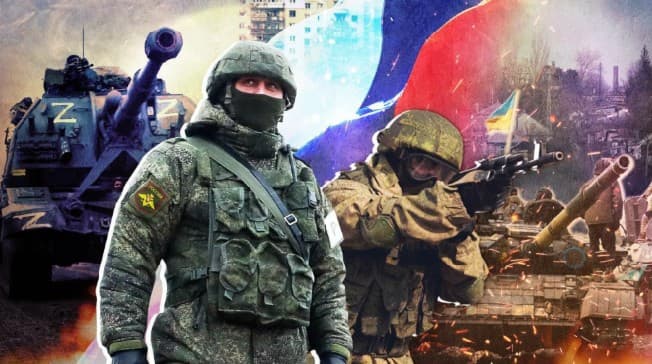
The full-scale Russian invasion of Ukraine on February 24, 2022, referred to by the Russian leadership as a “special military operation,” became the largest armed conflict in Europe since World War II. The Ukrainian state and the international community view this not as an “operation,” but as an illegal, unprovoked act of aggression against a sovereign country.
The reasons for the war lie in the realm of the Russian leadership’s imperial ambitions, its fear of a successful democratic Ukraine, and its desire to control Ukraine’s political trajectory.
1. The Kremlin’s desire to maintain influence in the post-Soviet space
Ukraine chose the path of independent development, democratization, and European integration. This contradicted the Kremlin’s vision, which seeks to keep neighboring countries within its sphere of influence.
2. Fear of a democratic and successful Ukraine
The strengthening of Ukrainian civil society and reforms caused anxiety in the Kremlin: a democratic Ukraine could serve as an example for Russians themselves, threatening the authoritarian model of governance in the Russian Federation.
3. Manipulation of the narrative of “protecting Russian speakers”
For years, Russia promoted unsubstantiated claims about the “persecution of Russian speakers” in Ukraine. International organizations found no systemic violations of their rights. This claim merely became a convenient pretext for aggression.
4. Ukraine’s rejection of a pro-Russian political course
After the 2014 Revolution of Dignity, Ukraine firmly declared its European choice. Russia perceived this as a loss of political control and responded with the annexation of Crimea and the war in Donbas, which later escalated into a full-scale invasion.
5. Militaristic and revanchist ideology of the Russian leadership
The Kremlin consistently denied Ukraine’s right to exist as a separate nation. The notion of a “single people” was used as ideological justification for the invasion and territorial claims.
6. Attempt to stop Ukraine’s rapprochement with NATO and the EU
Although Ukraine was not a NATO member, Russia used the myth of a “Western threat” to justify its actions. In reality, Ukraine’s integration efforts were a peaceful political course, not a military danger.
7. Domestic political motives of the Russian leadership
Economic difficulties, declining public trust, and the need for an external enemy may have served as additional incentives. The war allowed the Kremlin to mobilize part of Russian society around itself.
The reasons behind Russia’s aggression against Ukraine stem from a combination of imperial ambitions, political fear, and ideological rejection of Ukrainian independence. Moscow sought to return Ukraine to its sphere of influence, to halt its democratic and European trajectory, and to justify internal problems through an external conflict. As a result, these factors led to the largest war in Europe in decades — a war that Ukraine is fighting to defend its freedom, independence, and right to follow its own path of development.